What Are Realistic Goals?
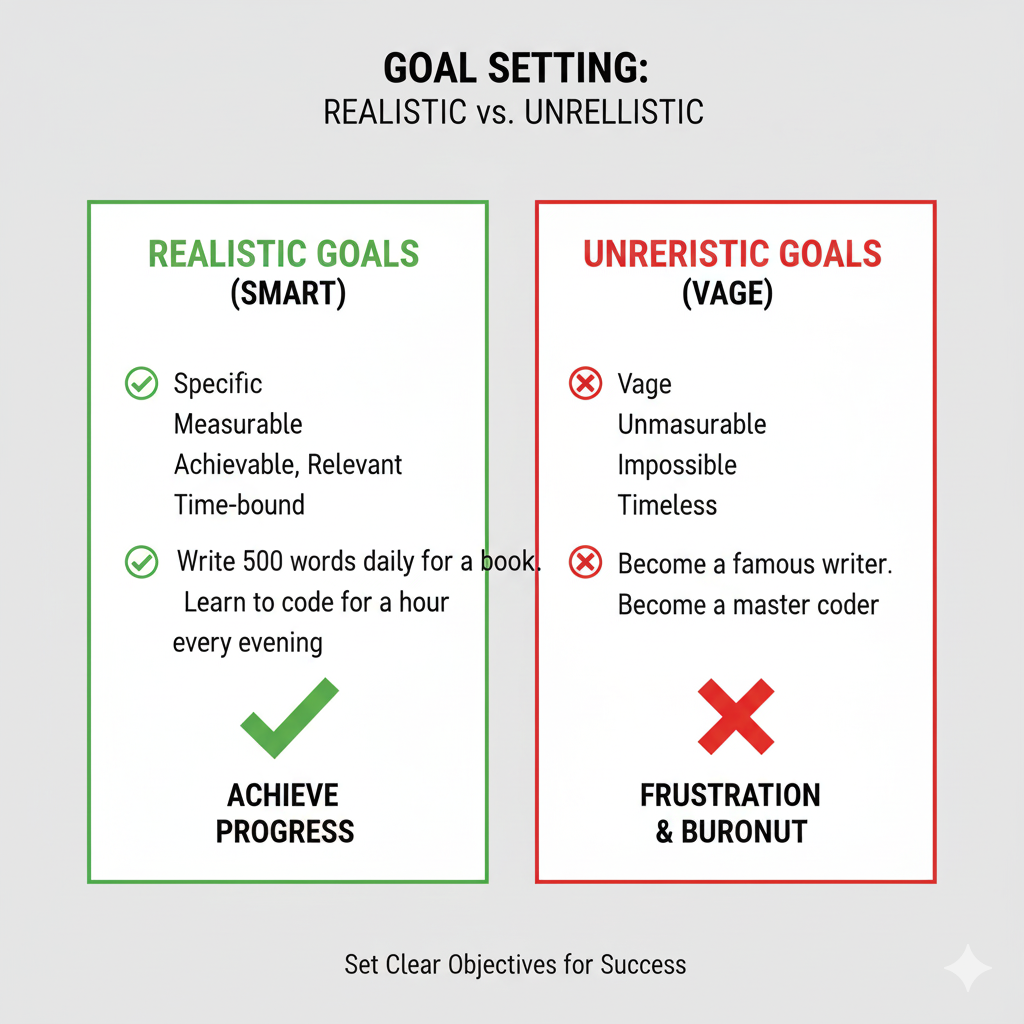
Realistic goals are targets that challenge you but remain achievable. They push your limits without breaking your spirit.
Think of realistic goals as stepping stones across a river. Each one gets you closer to the other side without forcing you to leap impossible distances. These goals match your current abilities, resources, and time constraints. They stretch you just enough to grow.
A realistic goal for a new runner isn’t completing a marathon next week. It’s running for 10 minutes without stopping. I once set a goal to double my client base in a month. It was unrealistic and left me frustrated. When I aimed for 20% growth instead, I succeeded and felt motivated.
Your goals should be ambitious enough to excite you but practical enough to accomplish with focused effort.
How Realistic Goals Affect Your Success
Unrealistic goals are the number one reason people abandon their plans. Studies show 92% of New Year’s resolutions fail! When your goals align with your actual capabilities, you build momentum through consistent wins. Teams with realistic project timelines report 64% higher satisfaction and 37% better results. Your brain craves the dopamine hit that comes from achievement. Realistic goals provide regular doses of this natural motivator.
Have you noticed how one small accomplishment can fuel your energy for bigger challenges? That’s the power of setting attainable targets.
Why Is It Important to Set Realistic Goals? 6 Benefits
1. Boosts Focus and Commitment
Realistic goals create clarity about what matters most. They filter out distractions. When your target feels achievable, you commit more deeply to the process. Your mind stops wandering to “plan B” scenarios because success seems possible. I’ve coached dozens of professionals who transformed their productivity simply by narrowing their focus to fewer, more realistic goals. The human brain responds better to specific, attainable challenges than to vague aspirations.
2. Nurtures Motivation, Confidence and Self-esteem
Each small win builds belief in your abilities. This creates a positive cycle. Realistic goals provide regular victories that fuel your motivation tank. Your confidence grows when you consistently hit targets rather than repeatedly missing impossible ones. I remember feeling unstoppable after achieving three modest goals in a row. That confidence helped me tackle bigger challenges. Self-esteem flourishes when you prove to yourself that you can do what you set out to do.
3. Improves Time Management
Realistic goals force you to assess how long tasks actually take. Most people underestimate by 40%! When you set achievable targets, you plan more effectively and waste less time. You’ll stop overcommitting and start delivering consistently. Time management improves naturally when your goals match the hours available in your day. Have you ever felt constantly behind schedule? Unrealistic goals might be the culprit.
4. Opens Your Life Up to New Opportunities
Realistic goals create space for unexpected possibilities. Impossible goals consume all your bandwidth. When you’re not constantly playing catch-up, you notice doors opening around you. Success breeds success. Each realistic goal you achieve can lead to new connections and opportunities. I’ve seen clients discover entirely new career paths while pursuing modest, achievable goals. Your network expands naturally when you have the capacity to engage with it.
5. Reduces Stress
The gap between expectations and reality creates stress. Realistic goals narrow this gap. Your body physically relaxes when tasks feel manageable rather than overwhelming. Sleep quality improves when you’re not lying awake worrying about impossible deadlines. Workplace studies show 76% lower burnout rates among teams with realistic project goals. I reduced my own stress levels dramatically when I started setting more achievable targets.
![Correlation between goal realism and stress levels]](https://blainy.com/wp-content/uploads/2025/09/Gemini_Generated_Image_3w6vc33w6vc33w6v.png)
6. Ramps Up Your Chances of Success
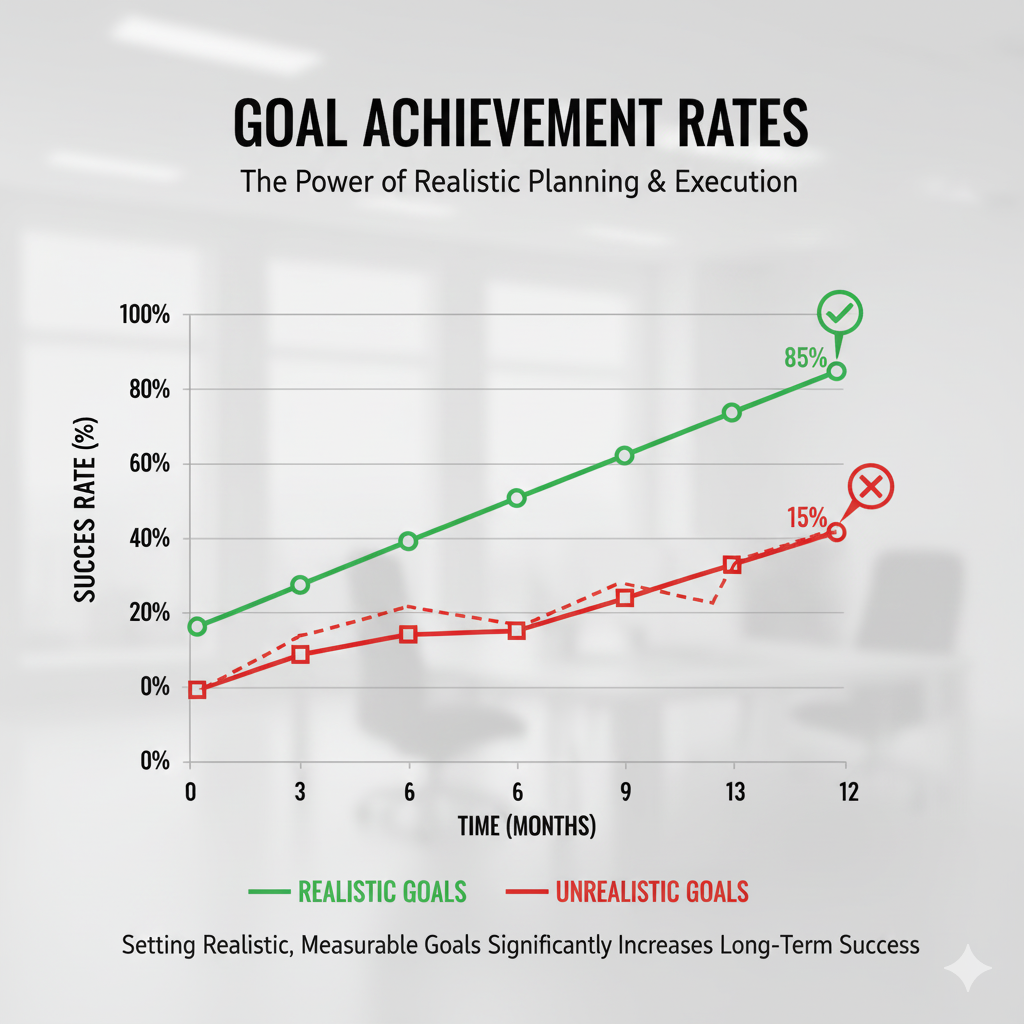
The most obvious benefit is also the most important: you actually achieve your goals! Success rates jump from under 10% to over 60% when goals shift from unrealistic to realistic. Momentum builds as you stack small wins on top of each other. Your brain rewires itself through successful experiences, making future achievements more likely.
Would you rather accomplish 8 out of 10 realistic goals or 0 out of 3 impossible ones?
Tips to Setting Realistic Goals
1. Start Setting Goals Right Now
Don’t wait for the “perfect time” to begin. There isn’t one. Take 10 minutes today to write down one realistic goal for this week. The sooner you start, the sooner you’ll experience the benefits of achievement. I keep a goal-setting template on my phone for capturing ideas whenever inspiration strikes.
What small, achievable goal could you set in the next five minutes?
2. Understand How You Spend Your Time
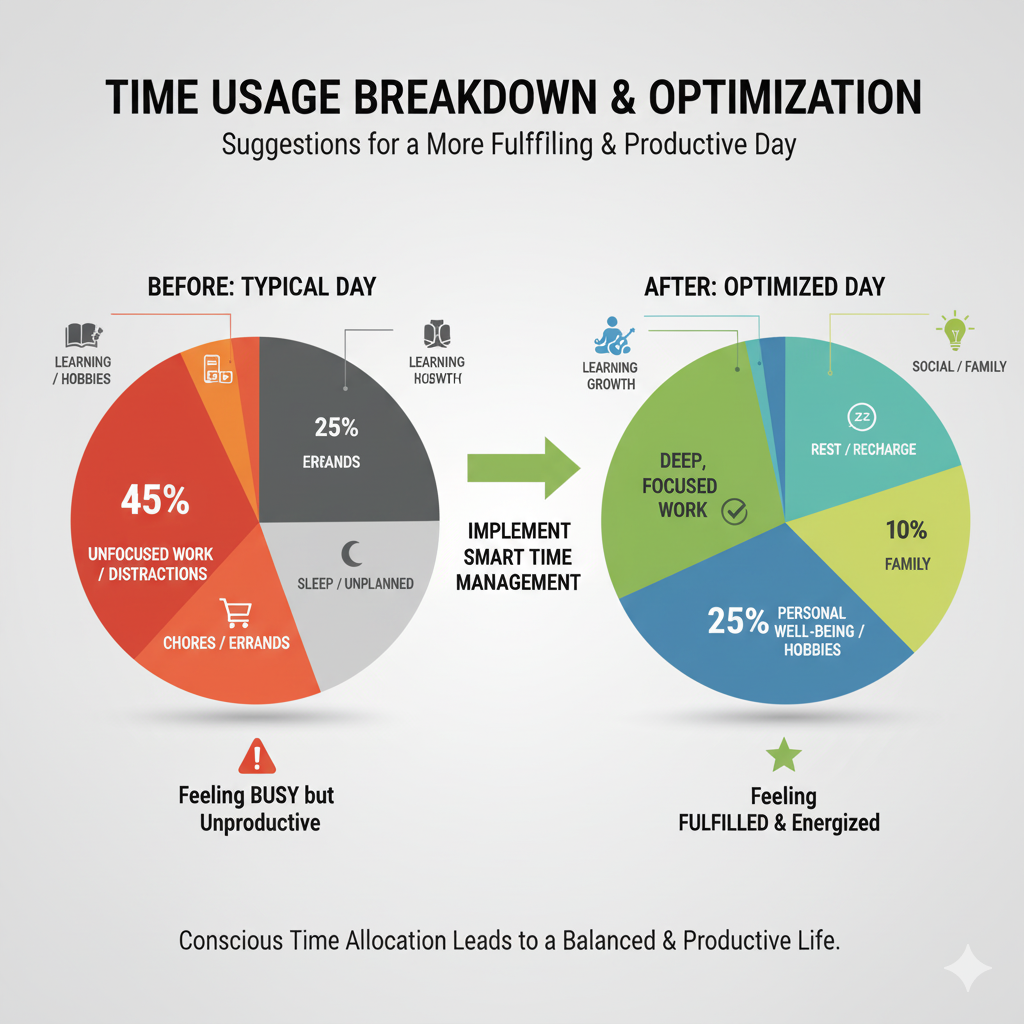
Track your activities for three days to see where your hours actually go. Most people can only focus deeply for 4-5 hours daily. Plan accordingly. Subtract 20% from your available time to account for interruptions and unexpected issues. I was shocked to discover I spent 14 hours weekly on low-value tasks that didn’t support my goals.
Your realistic goals must fit into your actual schedule, not an imaginary perfect day.
3. Build and Maintain Your Habit
Small, consistent actions beat sporadic heroic efforts every time. Create triggers that remind you to work on your goals daily. It takes about 66 days to form a new habit, not the 21 days many believe. I built a morning routine that automatically advances my most important goals before distractions hit.
What existing daily habit could you link to your new goal-related actions?
4. Avoid Activities That Don’t Fit Within Your Goals
Learn to say “no” to tasks that don’t move you toward your targets. Every “yes” to something unimportant is a “no” to your priorities. Delete, delegate, or defer activities that drain your energy without advancing your goals. I review my calendar weekly and ruthlessly eliminate commitments that don’t serve my objectives.
Your time and energy are limited resources. Invest them wisely.
5. Focus on What You Can Control
External outcomes often depend on factors beyond your influence. Focus on your actions instead. Set process goals (what you’ll do) rather than just outcome goals (what you’ll achieve). Weather, other people’s decisions, and market conditions are outside your control. Your effort isn’t. I shifted from “land three new clients this month” to “make 15 quality pitches weekly.” My results improved.
What aspects of your goal are fully within your control?
6. Share Your Goals With a Friend
Accountability increases goal achievement rates by up to 95%. Choose someone supportive but honest to share your goals with. Schedule regular check-ins to discuss your progress and challenges. My weekly accountability call with a colleague has kept me on track for two years straight.
Who in your life would make a good accountability partner?
7. Track and Analyze Your Goals
What gets measured gets managed. Track your progress consistently. Use simple tools like spreadsheets, apps, or even paper journals. Review your data weekly to identify patterns and obstacles. I discovered my productivity plummets after 3pm, so I now schedule creative work for mornings. Your tracking system doesn’t need to be fancy—it just needs to be used regularly.
8. Reward Yourself for Your Successes
Celebrate small wins to reinforce positive behavior. Choose rewards that don’t undermine your progress. Even tiny celebrations trigger dopamine release that strengthens your motivation. I treat myself to a special coffee after completing each milestone in my projects.
What healthy rewards would motivate you to stick with your goals?
The SMART Goal Framework
The SMART framework transforms vague wishes into achievable targets.
Specific: Define exactly what you want to accomplish. “Get healthier” becomes “walk 30 minutes daily.”
Measurable: Include numbers so you know when you’ve succeeded. “Save more” becomes “save $300 monthly.”
Achievable: Ensure it’s possible with your current resources and constraints.
Relevant: Align with your values and larger objectives.
Time-bound: Set a clear deadline. “Someday” rarely arrives.
I’ve seen SMART goals double success rates among my clients. They work because they eliminate ambiguity.
Common Pitfalls in Goal Setting
Many people set goals based on others’ expectations rather than personal values. Perfectionism kills progress. “All or nothing” thinking leads to giving up after small setbacks. Setting too many goals at once divides your focus and energy. Forgetting to adjust goals when circumstances change leads to unnecessary failure.
I once stubbornly pursued a goal that no longer served me, wasting months of effort. Learn to recognize when a goal needs modification or should be abandoned altogether.
In Summary
Setting realistic goals isn’t about limiting your ambition. It’s about channeling it effectively. Realistic goals boost your focus, motivation, time management, and overall success rate. They reduce stress while opening doors to new opportunities you might otherwise miss.
Start small, track your progress, and celebrate your wins along the way. Remember that consistency trumps intensity when it comes to achieving meaningful goals.
What realistic goal will you set today to move closer to the life you want?