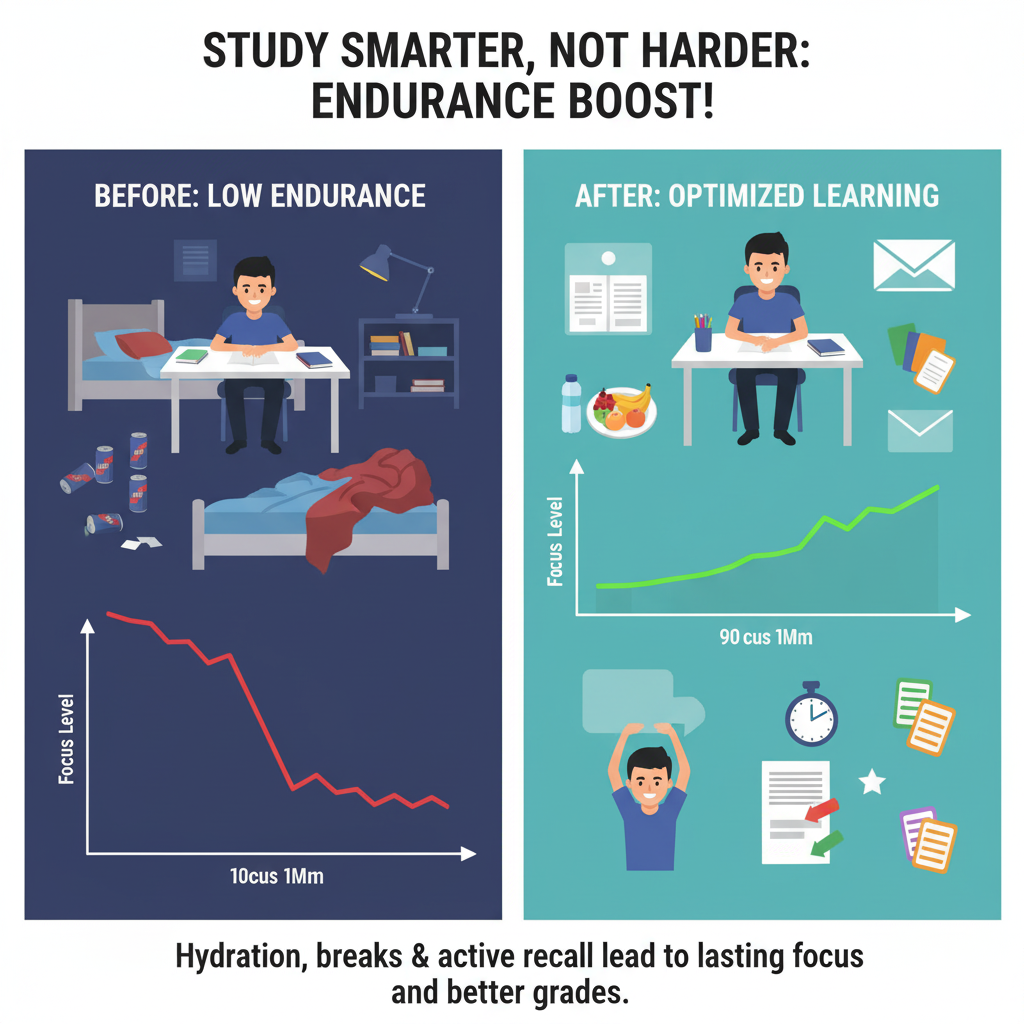
Ever wondered how some people can study for 8+ hours without losing focus? You’re not alone. The secret isn’t superhuman concentration, it’s smart study strategies. Let’s break down exactly how you can extend your study sessions without burning out.

Understanding Your Study Limits
Your brain isn’t designed to focus intensely for endless hours. That’s completely normal.
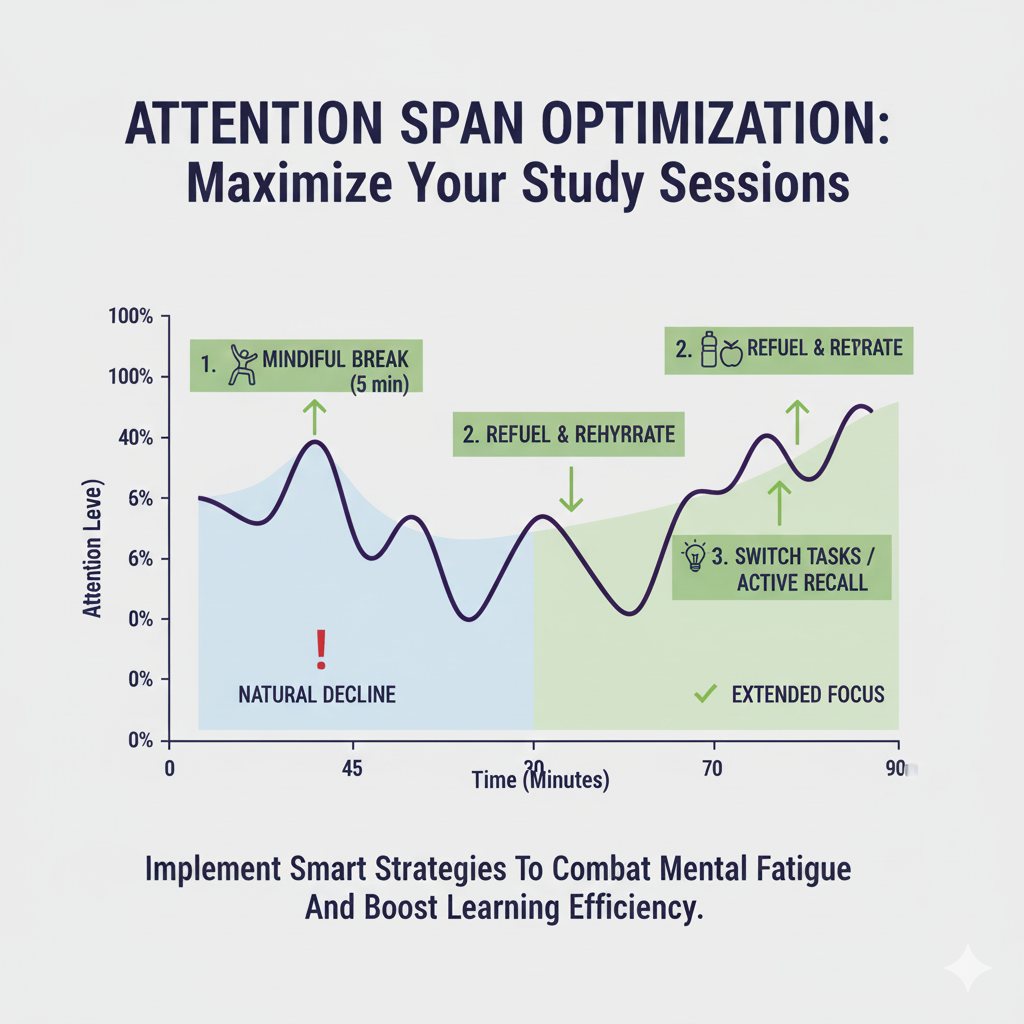
Most research shows that sustained concentration typically maxes out at 90-120 minutes before effectiveness drops significantly.
The goal isn’t to force yourself to study longer, it’s to work with your brain’s natural rhythms.
As Reddit user u/ProductivityNerd shared: “I used to think something was wrong with me because I couldn’t study for 6 hours straight. Then I learned about focus cycles and everything changed.”
Know your personal signs of mental fatigue: difficulty remembering information, re-reading the same paragraph, or your mind constantly wandering.
Create a Study-Friendly Environment
Your surroundings dramatically impact your ability to focus for extended periods.
Find a dedicated study space that your brain associates with focused work, not relaxation or entertainment.
Keep your study area clean and organized. Physical clutter creates mental clutter.
Consider temperature and lighting, studies show 70-72°F (21-22°C) and natural lighting optimize concentration.
Experiment with background noise. Complete silence works for some, while others focus better with ambient sounds or instrumental music.
As one student on Reddit explained: “I created a ‘focus corner’ in my room with good lighting, a comfortable chair, and zero distractions. My study time doubled almost immediately.”
The Power of Strategic Breaks
Working longer doesn’t mean working without breaks. Strategic pauses actually extend your total productive study time.
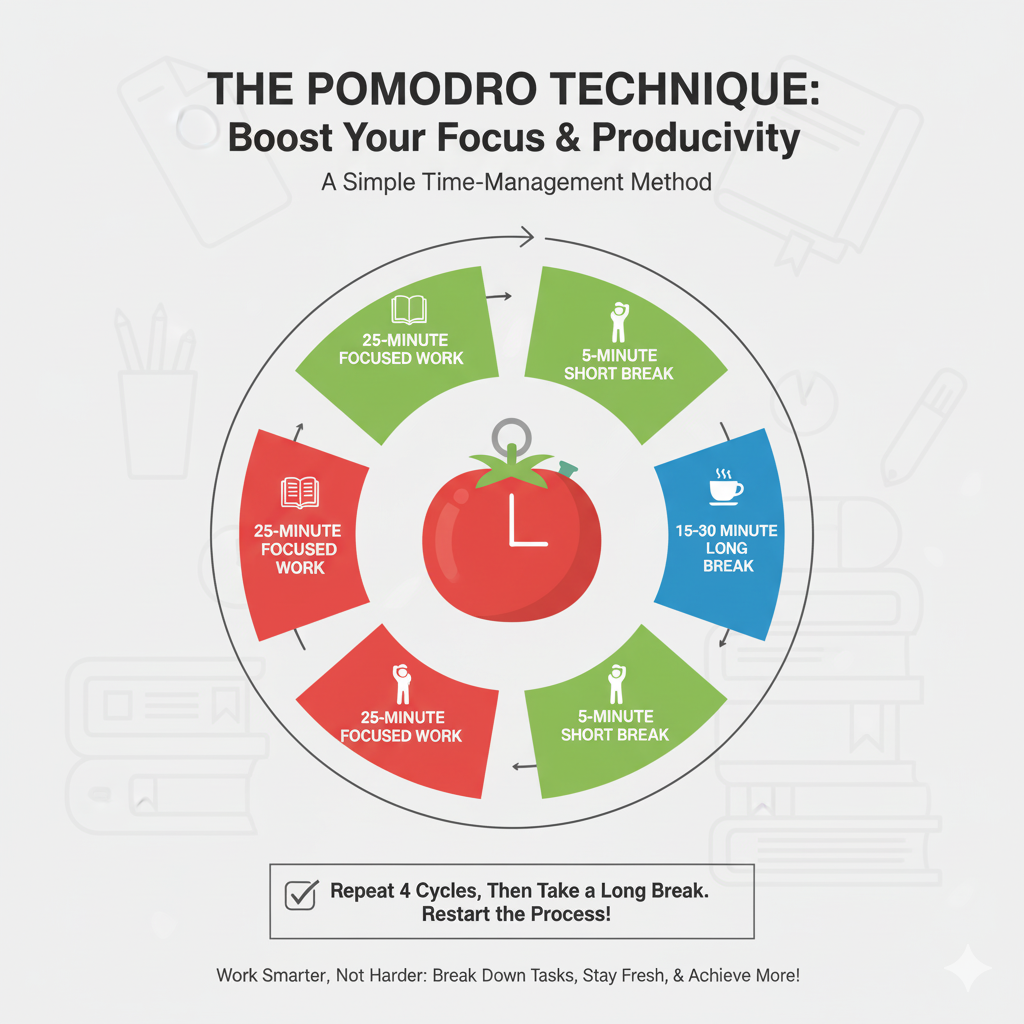
Try the Pomodoro Technique: 25 minutes of focused study followed by a 5-minute break. After four cycles, take a longer 15-30 minute break.
Use break time wisely stretch, walk, or grab a healthy snack. Avoid social media or TV, which can make it harder to return to studying.
Your brain needs these rest periods to process information and prevent mental fatigue.
Some students find longer focus blocks work better, experiment with 50 minutes of study and 10-minute breaks.
According to research, taking proper breaks can increase productivity by up to 20%.
Nutrition and Hydration Matter
What you eat directly impacts your ability to concentrate for long periods.
Avoid heavy meals before studying, they redirect blood flow to digestion instead of your brain.
Choose brain-friendly foods: nuts, berries, eggs, avocados, and dark chocolate can improve cognitive function.
Stay consistently hydrated. Even mild dehydration reduces concentration and mental performance.
Consider timing your caffeine strategically, a small amount 30 minutes before studying can boost focus, but too much causes jitters and crashes.
Keep healthy snacks within reach during long study sessions to maintain steady energy levels.
Sleep: Your Study Superpower
No strategy for long study sessions works without proper sleep.
Aim for 7-9 hours of quality sleep nightly, research shows this is non-negotiable for effective learning.
Avoid all-nighters. They severely impair memory formation and information processing.
A 20-minute power nap can restore alertness when you hit an afternoon slump.
Consistent sleep schedules regulate your body’s internal clock, making it easier to maintain focus during planned study times.
One Reddit user shared: “I stopped pulling all-nighters and started prioritizing sleep. Now I can study effectively for 6 hours instead of struggling through 10 ineffective ones.”

The Active Learning Advantage
Passive reading is the enemy of long study sessions. Active learning keeps your brain engaged.
Switch between different study methods: flashcards, practice problems, teaching concepts aloud, and summarizing in your own words.
Try the Feynman Technique: Explain what you’re learning as if teaching a 12-year-old. This exposes gaps in your understanding.
Create mind maps to visualize connections between concepts.
Take handwritten notes, research shows this improves retention compared to typing.
Quiz yourself regularly. Testing enhances learning more than re-reading material.
Mix Up Your Subjects
Studying one subject for hours leads to diminishing returns and mental fatigue.
Alternate between different subjects or topics every 1-2 hours to maintain interest and focus.
Start with your most challenging subject when your mind is freshest.
Save easier or more enjoyable subjects for when your energy naturally dips.
This technique, called interleaving, actually improves long-term retention compared to blocked studying.
As one student on Reddit noted: “I used to study one subject per day. Switching to 1.5-hour blocks of different subjects completely eliminated my study fatigue.”
Physical Activity Boosts Mental Endurance
Exercise isn’t just for your body, it dramatically improves your brain’s ability to focus.
Even a 10-minute walk between study sessions increases blood flow to your brain and improves concentration.
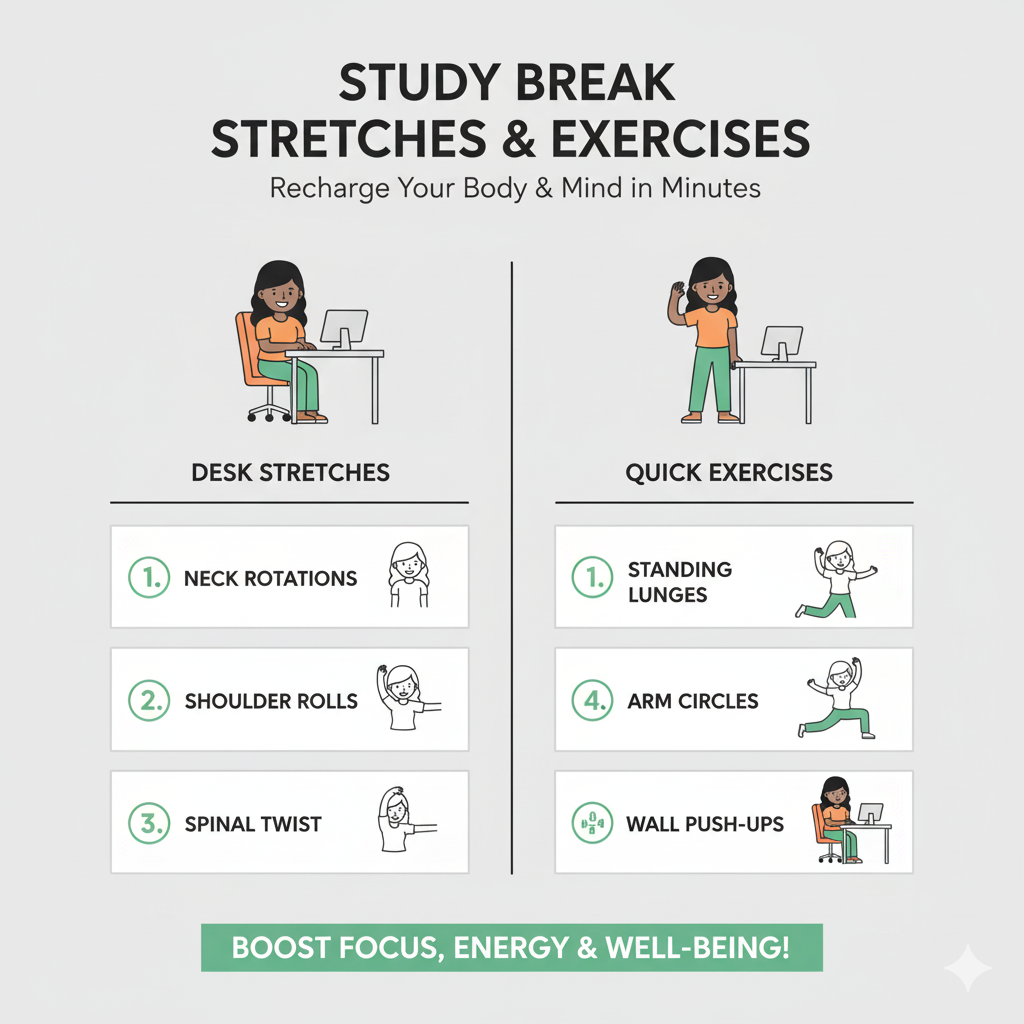
Consider quick exercise breaks: jumping jacks, push-ups, or yoga stretches can reset your focus.
Regular physical activity increases BDNF, a protein that supports brain cell growth and learning.
Students who exercise regularly report being able to study 25% longer with better retention.
Morning exercise particularly sets you up for a productive day of studying.
Manage Digital Distractions
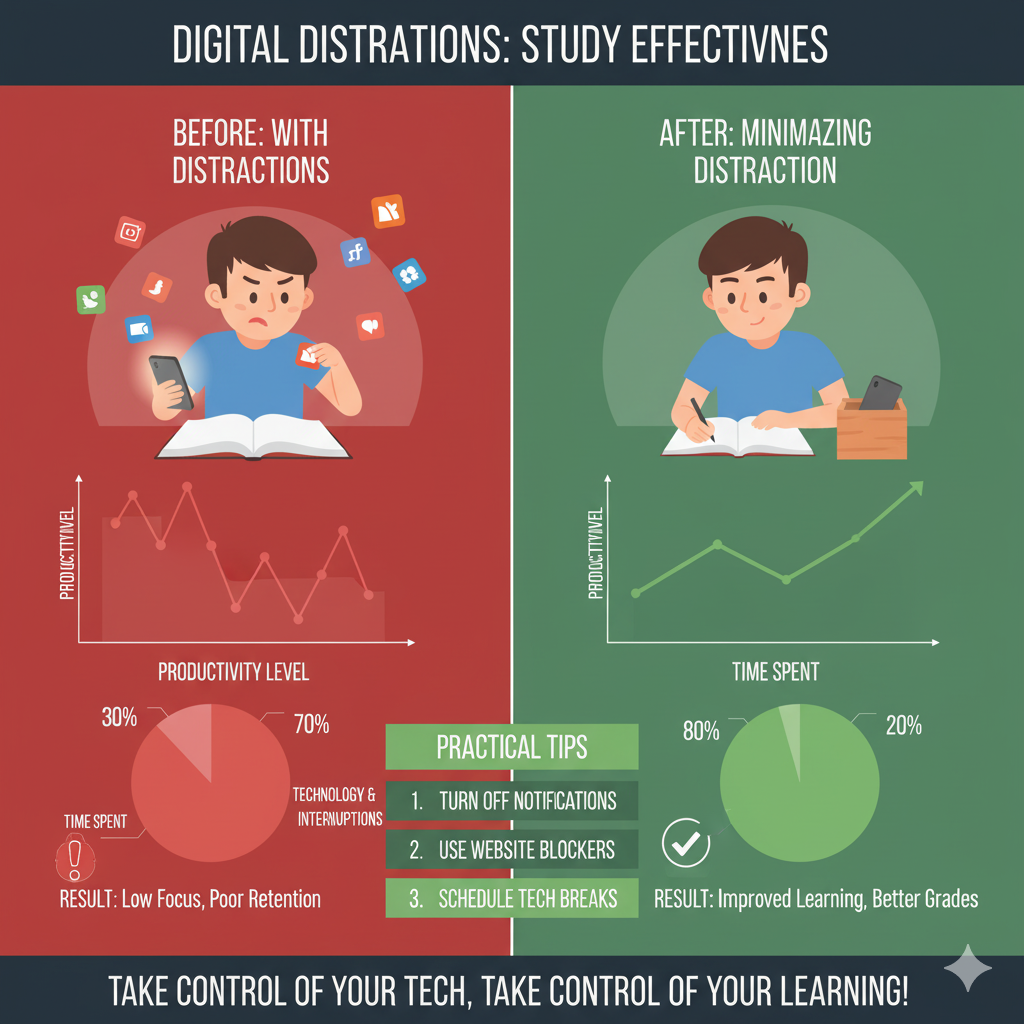
Your phone is the #1 enemy of sustained focus during long study sessions.
Use apps like Forest, Freedom, or Focus@Will to block distracting websites and notifications.
Put your phone in another room, not just on silent. The mere presence of your phone reduces cognitive capacity.
Consider a “digital sunset” approach: gradually reduce screen time as evening approaches to improve sleep quality.
One study found that it takes an average of 23 minutes to refocus after a digital interruption.
As a Reddit user candidly shared: “I started putting my phone in another room during study blocks. My study time literally doubled.”
Set Clear Goals and Track Progress
Studying “for a long time” is too vague. Specific goals create focus and motivation.
Break large topics into smaller, measurable chunks that you can complete in a single session.
Use a study tracker to record your focused hours and accomplishments.
Seeing your progress provides motivation to continue during challenging days.
Create a visual “done list” where you check off completed tasks. This triggers dopamine release and encourages continued effort.
Set both process goals (“Study for four focused hours”) and outcome goals (“Master chapter 5”).
Create Accountability Systems
Studying alone for long periods requires exceptional self-discipline. External accountability helps.
Find a study buddy or group who shares your commitment to focused work.
Try “body doubling”—studying alongside someone else, even virtually, reduces procrastination.
Use public commitment—tell others about your study plans or post them online.
Schedule regular check-ins with a mentor or tutor to discuss your progress.
Online platforms like Focusmate pair you with accountability partners for scheduled study sessions.
Mindfulness and Mental Preparation
Long study sessions require mental stamina that can be developed through mindfulness.
Start each study session with 2-3 minutes of deep breathing to center your mind.
Practice the “5-4-3-2-1” grounding technique when focus wavers: acknowledge 5 things you see, 4 things you feel, 3 things you hear, 2 things you smell, and 1 thing you taste.
Use visualization before studying—imagine yourself focused and productive.
When distracting thoughts arise, acknowledge them without judgment, then gently return to your task.
Regular meditation practice (even just 10 minutes daily) increases attention span over time.
Reward Systems That Work
Your brain responds powerfully to rewards, even small ones.
Create a personalized reward system for completing study milestones.
Small rewards work after short sessions (a short walk, a piece of chocolate), while bigger rewards follow longer achievements.
Delayed gratification builds discipline—save checking social media or watching videos for after completing your study goals.
One Reddit user shared: “I keep a jar of my favorite candy on my desk. One piece for each completed Pomodoro session. Simple but surprisingly effective.”
Make rewards immediate and directly tied to specific accomplishments for maximum motivational impact.
Conclusion: The Sustainable Study Approach
Studying for long hours isn’t about forcing yourself to sit at a desk all day. It’s about working with your brain’s natural rhythms while minimizing distractions.
Start by implementing just 2-3 of these strategies. Notice what works for your unique learning style and gradually add more techniques.
Remember that consistency beats intensity. Five focused hours daily for a week accomplishes more than a single 15-hour cramming marathon.
Your ability to study for extended periods is a skill that improves with practice, proper nutrition, adequate sleep, and strategic breaks.
The most successful students aren’t those who study longest—they’re the ones who study smartest.
What study technique will you try first? Your future self will thank you for starting today.